
Sorry, we couldn't find this page
It looks like the page you are looking for doesn't exist. It may have been moved, removed, or perhaps you made a spelling mistake.
Referring Page: https://www.meantime.co.uk/latest_feature/5/1/Introduce_efficiencies_now_to_avoid_cuts_later.htm
If this link came from within this site, please get in touch and let us know the page you came from. Where would you like to go next? Try one of the links below or visit our sitemap for a full list.
Do you have a question or need some help?
Get in touch
- 01539 73 77 66
- Email us
Further information
Certifications
Meantime are ISO 27001 and Cyber Essentials certified. We are registered with The ICO



- © Meantime IT 2026
- Meantime IT. 2.1, Riverside Business Park, Natland Road, Kendal, LA9 7SX

Dublin Airport Ltd.
As a major international airport, Dublin Airport has to manage over 27 million people per year flying to over 180 destinations. It’s operated by DAA, an expert in airport management and aviation services.
Dublin Airport - www.dublinairport.com
Meantime and Dublin Airport
Meantime's reputation within the aviation industry led Dublin Airport to appoint the company for the job of developing its Platinum Services booking system. The company delivered above and beyond expectations with a level of customer service which delighted Dublin.Testimonials
Meantime work in a collaborative way that is refreshing for all our team, there is always a commitment to understand what we are looking for and find a solution.
"Philip Bolger, Platinum Services Manager
We badly needed a new system that would streamline our processes, allow us more time to grow the business and most of all enhance what we offer our clients.
"Philip Bolger, Platinum Services Manager
Meantime have not only delivered but have brought a level of customer service that truly makes us feel like a valued client.
"Philip Bolger, Platinum Services Manager
 When it comes to luxury, Meantime show Dublin that the sky’s the limit
 More bookings at Dublin airport
 Clear skies ahead for Dublin Airport’s VIP system
AMaT
AMaT is an audit management and tracking system which was created in partnership with the NHS in order to ensure that routine audit activity leads to improvement. Meantime has been responsible for ongoing development since 2016 and the system is increasingly being taken up by healthcare organisations across the UK. As of March 2022 there are 25 trusts, health boards, and private groups auditing through AMaT.
AMaT - www.amat.co.uk | Twitter - @trackedbyAMaT
Meantime and AMaT
Meantime IT continues to work with AMaT and its super user group, delivering ongoing enhancements which ensure that routine audit activity is streamlined into highly effective pathways to improvement. Meantime IT’s expertise is helping clinical audit professionals to fully realise the potential of cloud-based systems for the future of healthcare.Further Information (external links)
Improving efficiency and effectiveness of care - lancsteachinghospitals.nhs.uk articleDigital audit management tool helps Lancashire trust save time and money - digitalhealth.net article
How clinical auditing is moving with the times - That's Lancashire YouTube video
Testimonials
With AMaT, we have a system to capture what activity is taking place, one that gives people ownership and puts names against actions, and one that provides visibility of how projects are progressing and who has completed what.
"Deborah Kershaw, Head of Outcomes and Assurance, Stockport NHS Foundation Trust
The feedback we get is incredible. I have not had a single person use it and say they don't like it.
"Tracey Brailsford, Quality and Performance Lead, Derbyshire Community NHS Trust
There was nothing that did everything that we wanted it to do, for example ward audits and NICE compliance statements. [AMaT is the] solution that best meets our needs.
"Alison Leather, Clinical Audit & Effectiveness Manager, LTHTr
AMaT gave us more insight into what the problems were in meeting the audit criteria.
"Laura Kirby, National Clinical Information Lead, Spire Healthcare
One of the nurses was having to type up CQC spot checks on paper, at night and over the weekend. Now this is done in AMaT, the data and reports are all there. It has saved her a huge amount of time.
"Deborah Kershaw, Head of Outcomes and Assurance, Stockport NHS Foundation Trust
AMaT has reduced the time taken to carry out an audit, and increased visibility of the process.
"Alison Leather, Clinical Audit & Effectiveness Manager, Lancashire Teaching Hospitals Trust
Case Studies
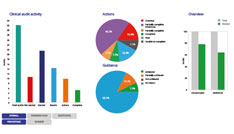 How one health board in Wales is advancing care with evidence from AMaT
  Derbyshire Community NHS Trust uses AMaT to drive clinical improvement
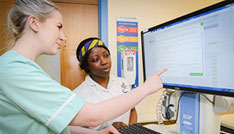 Lancashire Teaching Hospitals puts quality into action with new digital platform
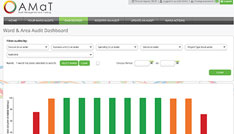 Stockport NHS Foundation Trust drives its quality aspirations with AMaT.
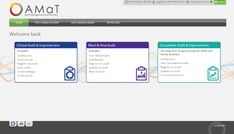 Meantime put their finger on the pulse of audit management
 More Trusts trust AMaT
The Listening Place
The Listening Place was conceived in 2015 and set up in 2016 in London, by a group of volunteers with a great deal of experience in supporting people who feel that life is no longer worth living. It is a charity with an award winning team of volunteers who offer free, confidential and ongoing face-to-face listening, by appointment.
The Listening Place - www.listeningplace.org.uk
Meantime and The Listening Place
Using our expertise in booking engine software, and simplifying complex workflow, Meantime worked with TLP to create a new online system to manage their Visitor’s interactions with them. Replacing an existing, disparate suite of ageing software products, Meantime created a fully integrated solution, catering for online API registrations for those in need of help or referral, through to appointment management, 2-way SMS communication, and finally in support metric and KPI reporting outputs.Testimonials
Meantime IT never failed to respond quickly and efficiently, helping translate our requests into functional pieces
"Laura Fach – New Site/Project Manager
Just wanted to say how fantastic the new database is - the design is really intuitive and easy to use, and the new functionality like reports to review and the timeline are a great step forward.
"The Listening Place Volunteer
I have been using the database this morning for the first time, and I think it's excellent!
"The Listening Place Volunteer
It seems to work wonderfully and is a joy to use
"The Listening Place Volunteer
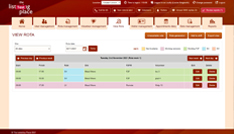 Meantime IT listens to volunteers to develop cloud-based system
Heathrow Airports Ltd
Heathrow Airport is a major international airport in London, United Kingdom. Heathrow is the third busiest airport in the world by international passenger traffic, as well as the busiest airport in Europe by passenger traffic, and the sixth busiest airport in the world by total passenger traffic.
Heathrow Airport Ltd. - www.heathrow.com
Meantime and Heathrow
In 2010 Meantime were invited by BAA's Business Support Centre to write a system to manage appointments at the ID Centres at their six airports. There was a strict (and close!) deadline but we delivered to their requirements, on time and on budget. Such was the success of that project that we were then invited to write a system to manage the registration and, later, deployment of people who wanted to volunteer to help at Heathrow for the 2012 Olympics. Since then, we have written a system to deploy non-operational staff around Heathrow on those occasions when extra help is required in the terminals, a booking system for VIPs passing through the airport's private suite, and systems to manage the training of external staff who are working at the airport (the staff at Costa, for example), which was recently extended to cater for construction contractors at the airport.Testimonials
The system was built and delivered within two months, branded the way we wanted, built the way we wanted, and with a lot more intelligence than we’d anticipated.
"Karima Khandker, Retail Academy Manager, Heathrow Airports Ltd. (BAA)
The software will pay for itself in a short period of time.
"Karima Khandker, Retail Academy Manager, Heathrow Airports Ltd. (BAA)
A system this intuitive really is worthwhile.
"Karima Khandker, Retail Academy Manager, Heathrow Airports Ltd. (BAA)
With the data we collect on the system we now have a level of intelligence we didn’t previously have.
"Karima Khandker, Retail Academy Manager, Heathrow Airports Ltd. (BAA)
A robust, reliable system for a competitive price, with the ability to deliver within a very short space of time.
"Lynn McNicholl, project leader, Heathrow Airport Ltd.
Case Studies
 Meantime’s software essential to Heathrow operations
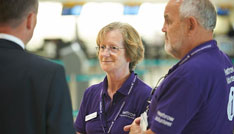 Meantime helps Heathrow put passengers first
 Back to school for Heathrow’s retail partners
News
 Heathrow Volunteers proves there is no shelf-life to bespoke software
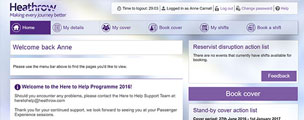 Meantime developing Heathrow’s ‘Here to Help’ system
 Meantime’s software creates efficiencies for airports
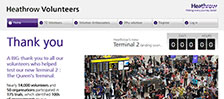 Meantime’s software helps Heathrow’s T2 get off to a flying start
 Meantime's software enhances Heathrow's customer satisfaction
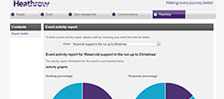 When it comes to clever systems, the sky’s the limit
 Heathrow chooses Meantime for new retail programme
 Heathrow reaches volunteer target
 BAA appoints Meantime IT to deliver time-critical IT project

Eggbase Ltd
Eggbase was founded in 2011 by Managing Director Anne Fleck. Many businesses in the egg and poultry sector now rely on Eggbase software.
Eggbase - www.eggbase.co.uk
Meantime and Eggbase
Proving there's no field in which a strong IT solution can't make a difference, our work for Eggbase makes it possible to manage all aspects of egg production. The result enabled the company to reach a staggering 400% growth in just 12 months but the process was as delicate as handling the eggs.
In order to fulfill the brief, Meantime had to unite a group of standalone and static applications and make them accessible anywhere at anytime. The already popular software was making too many demands on owner Anne Fleck's time and desperately needed a complete overhaul. We carried out a consolidated approach, putting everything online to make Eggbase accessible anywhere in the world from any computer, smartphone or tablet. This, and a whole new level of functionality, means Anne can really count her chickens.
Testimonials
Thanks to Meantime, I've freed up three days a week that I can spend growing the business, and I've been able to take it to a level I never thought possible.
"Anne Fleck, Eggbase Ltd.
The team at Meantime really listen to what I need and are excellent at interpreting it.
"Anne Fleck, Eggbase Ltd.
The attention to detail from Meantime is very satisfying, they're logical, they're thorough and I can't speak highly enough of them.
"Anne Fleck, Eggbase Ltd.
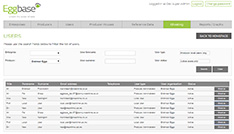 Meantime helps Eggbase grow 400%
 Meantime help Eggbase go free range
 Streamlined software puts all eggs in one basket
Sika
Headquartered in Switzerland, Sika is a speciality chemical company with expertise in the building and automotive industries. With annual sales of over £4 billion, Sika operates in 98 countries and employs more than 17,000 people.
Sika - www.sika.com
Meantime and Sika
Sika sought Meantime for their expertise in transitioning systems onto a mobile platform. With much of the work done out on site, this prerequisite was the starting point for Meantime’s work.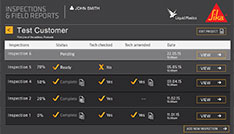 Meantime prove to be a solid foundation for the building industry
Catch Up
Catch Up® is a not-for-profit charity working to address literacy and numeracy difficulties that contribute to underachievement.
Catch Up® - www.catchup.org
Meantime and Catch Up®
One of the vital links in the learning chain of children struggling with literacy or numeracy is a charity called Catch Up. Their work in offering complete training, resource and support packages can make all the difference. Unfortunately, when it came to IT systems, Catch Up needed to catch up.
Their existing solution could not keep pace with the growing number schools, teachers, resources, and service offerings they were dealing with.
After they approached Meantime, we developed a new website, content management system, expanded administrative capabilities, and a robust new online booking system which enabled schools and teachers to sign up. The full online automation of what previously involved copious amounts of paperwork, meant Catch Up could become a effective at delivering their core services and face the future ahead of the curve.
Testimonials
Many of our labour-intensive manual office processes have been automated very successfully, thanks to Meantime
"Julie Lawes, Catch Up® Director
The staff at Meantime have been a delight to work with - always prepared to go the extra mile
"Julie Lawes, Catch Up® Director
 Meantime software helps charity to extend its work with struggling learners
TEAM75LIVE
TEAM75LIVE was initially set up by Meantime client Chris Leaning to stream The 1975’s concerts to other fans around the world. As the enterprise became more and more popular, Chris decided to use its success to raise money for Warchild. He came to Meantime to ask us to donate the site, which we were only happy to do: Chris is a longstanding client and a good friend, and Warchild is a great charity.
TEAM75LIVE - www.team75live.com

Coniston Corporate Ltd
Coniston Corporate Embroidery is based in the Lake District at the head of Coniston Lake. Established in 2000, Coniston Corporate supply workwear and bespoke embroidery to their UK wide customer base.
Coniston Corporate UK - www.cceuk.org
Meantime and Coniston Corporate
An overly complex ordering system meant Meantime needed to unpick lots of problems for this embroidery company. Coniston provided a white label service to its clients so they could sell clothing to their own customers. But the process needed to be centralised and streamlined and to link each customer's website to their own processing system.
Our solution resulted in the smooth automation from ordering to warehouse picking, embroidery, delivery, and finally, invoicing. Sellers maintained their extra revenue stream but with less work and Coniston gained a better overall view of sales through a refined design which was more SEO readable and even more user-friendly
Testimonials
Meantime has offered us an exceptional and innovative service allowing our business to grow beyond all expectations.
"Paul Reilly, managing director, Coniston Corporate Ltd
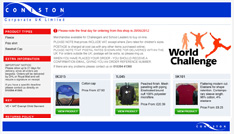 Coniston’s ordering system delivers extra income to its clients
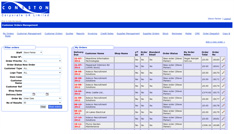 Meantime’s bespoke system eliminates stress and enables growth
 Automated ordering system sees Coniston Corporate grow by 16%
Helen O'Grady Drama Academy
The Helen O'Grady Drama Academy is the only organisation of its kind in the UK and had its origins in Australia many years ago. In 1979, Helen O'Grady, a trained teacher, drama teacher and actress, hired a hall in a Perth suburb and commenced after school drama classes for children. Her aims were to provide a self-development through drama programme for children.
Helen O'Grady - www.helenogrady.co.uk
Meantime and Helen O'Grady
With over 15,000 students, the biggest drama Helen O'Grady Academies had was in keeping track of everyone. This was made even more difficult when all those students are spread across 50 sites in the UK, each with different Principals all doing admin their own way. It left the UK's leading acting academy in need of strong direction.
That's when Meantime was appointed and together we gave it the MIDAS touch - a web-based system which stands for Management Information Data and Support. Our bespoke solution replaced the old paper system and made it possible to keep track of pupils, maintain accounts, and deliver marketing campaigns. It was the 24-7 approach Helen O'Grady Drama Academies needed enabling tasks that would usually take a day to be completed in just ten minutes. Needless to say, it became a smash hit.
Testimonials
The cost of installing the system has been treated as an investment for the future of the business and enabled it to grow.
"Nigel le Page, licensor, Helen O'Grady Drama Academy
The system has released our franchisees to spend more time on marketing and promotional activities, which in turn has led to the expansion of their own individual businesses.
"Nigel le Page, licensor, Helen O'Grady Drama Academy
When our company was considering a web-based management system for our franchise network, Fenner and his staff provided us with a business system which met all our needs.
"Nigel le Page, licensor, Helen O'Grady Drama Academy
We have always been impressed with both the response and the advice received when placing requests for additions to our original specification.
"Nigel le Page, licensor, Helen O'Grady Drama Academy
The main factors for the excellent relationship we now enjoy with Meantime is their flexible approach and promptness in dealing with any enquiries by us.
"Nigel le Page, licensor, Helen O'Grady Drama Academy
We look forward to continuing working with Fenner and his staff for many years to come.
"Nigel le Page, licensor, Helen O'Grady Drama Academy
Case Studies
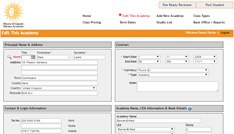 The Midas touch helps drama franchise grow business
Entrust Social Care
Entrust Social Care was established over fourteen years ago since which time they have built and developed relationships with hundreds of clients throughout the Public and Private Sectors, across the UK, supplying the highest calibre qualified Social Workers and Support Workers within Children's Services, Adult Services, Mental Health Services and Youth Offending.
Entrust - www.entrustsocialcare.co.uk
Meantime and Entrust
The success of Entrust Social Care meant that commercial director, Ian Brindley, was spending two days each week manually inputting timesheets and contract details into spreadsheets. The rules and regulations associated with the business complicated the process even further. Meantime were called upon in order to streamline this into a bespoke solution which would enable further growth and cost-savings.
We created a database which could store every detail about Entrust's clients and their locums including pay rates, tax rates and contract details. On top of this was placed a user-friendly admin interface which enabled the system to be easily kept up to date. Reports were easily obtained and the automation led to all the hoped-for savings. And all because of Entrust's trust.
Testimonials
Meantime's bespoke business system has saved us a significant amount of operational overheads and at least one member of administration staff, to the tune of at least £20,000 each year.
"Ian Brindley, Entrust Social Care
Without the bespoke software from Meantime, we simply wouldn't have been able to expand the way we have.
"Ian Brindley, Entrust Social Care
We haven't had a single second of downtime since Meantime's bespoke software was implemented.
"Ian Brindley, Entrust Social Care
We have been working with Meantime for the past four years and have received an absolutely excellent service from day one.
"Ian Brindley, Entrust Social Care
The quality of Meantime's business software is unquestionable and we have had no system outages over the four year period.
"Ian Brindley, Entrust Social Care
I would not look elsewhere for either bespoke business software or support and can highly recommend Meantime.
"Ian Brindley, Entrust Social Care
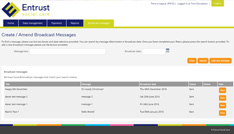 Meantime system saves Entrust £20k and 100 operational days per year
 Automated payment system saves two days a week for Entrust MD
Retro Co
Retro Co is an online shop for A Card And A Gift, the company that sells the iconic CD and DVD cards throughout the world. As less and less people have CD players and move to enjoying to their music on MP3 players, Retro Co needed a mechanism to download musical content to people who had purchased one of their cards.
Retroco - www.retroco.com
Meantime and Retroco
RetroCo's business model - of allowing customers to create birthday cards on disc featuring songs from the birth year - was in danger of becoming a little too retro for its own good. It needed to move with the times and allow for downloading tracks, as well as receiving physical CDs. So they called Meantime and our solution was music to their ears. We built a system using Amazon Cloud to manage the uploading and downloading of the files. This was capable of handing the demand, no matter how busy things became. Amazon's server also had the benefit of being the most cost-effective way to do this - able to adapt to demand but not costing the earth during idle times. And by use of a neat approach to file management, we also helped RetroCo upload individual tracks but have them delivered as a single package - meaning customers on slower systems could move at their own pace. It was all another bespoke solution and a number one hit for RetroCo!Testimonials
Working with Meantime has been a revelation. There’s absolutely no question we’ll continue working with them in our future IT projects.
"Chris Leaning, managing director, Retro Co
Working with Meantime is so easy. They get the point straight away from the briefest of instructions and I hardly need to be involved.
"Chris Leaning, managing director, Retro Co
Fenner is methodical, very bright and has an ability to see exactly what I need.
"Chris Leaning, managing director, Retro Co
With Meantime, everything gets done quickly and with minimum effort.
"Chris Leaning, managing director, Retro Co
I’ve never had such a good experience with an IT company before.
"Chris Leaning, managing director, Retro Co
 RetroCo goes future with Meantime’s software
Mobility Connect
Mobility Connect offers mobility products such as scooters, chairs and beds on financial terms to suit anyone's pocket.
Mobility Connect - www.mobilityconnect.co.uk
Meantime and Mobility Connect
Meantime IT developed a bespoke software solution which enabled Mobility Connect to better serve their customers.
Testimonials
Meantime were efficient and friendly, and their system solution has saved us time and money.
"Louise Livesey, Managing Director, Mobility Connect
Case Studies
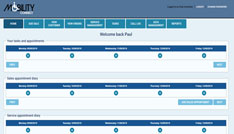 Meantime make customer relations upwardly mobile
eatsleepthink
eatsleepthink are an award-winning team of creative individuals with a passion for great work. With a diverse range of talents and US partner G&S Business Communications, Eatsleepthink offer a genuine promise of originality, creativity and innovation all over the globe from the outskirts of Sheffield.
eatsleepthink - eatsleepthink.com
Meantime and eatsleepthink
When faced with a client called eatsleepthink Design, we knew we'd have to prove that Meantime ate, slept and thought about our business too. Luckily, the attention to detail we show every project shone through as we tackled a complex project to develop an app for young people facing life challenges. Working closely with eatsleepthink and Sheffield Futures, we brought all the content and resources together in a multi-device app called Mi LifeMapp. Our technical skills, however, was only part of what made this collaboration a success. With this project being so sensitive, eatsleepthink wanted a partner who could work to a vision, respecting the many issues surrounding it. As proud as we are of our technical abilities, in this case we are even more proud that we're that partner.Further Information (external links)
Launch of Mi LifeMapp - YouTube video
Testimonials
One of the smoothest collaboration projects we’ve ever had, and it’s a credit to Fenner and the team
"Mike Marshall, eatsleepthink Design Limited
Meantime gave us, and Sheffield Futures just what we wanted: an app that supplies the young people of Sheffield with an optimal and discreet solution,
"Mike Marshall, eatsleepthink Design Limited
Case Studies
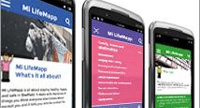 Creating resources for at-risk teens
Edge of the World
Edge of the World is where adventurous people go to look for clothing to kick back and relax in. Their commitment to quality, service and a totally laid-back vibe has helped them grow across the North of England.
Edge of the World - www.edgeoftheworld.com
Meantime and Edge of the World
Our belief that great communication leads to a great partnership has served us well with Edge of the World. Their desire to maintaining a clear dialogue with their customers led them to commission the development of a bespoke email system from Meantime. They wanted a system which could take email addresses from wherever the customer chose to give one: from in-store when asked at the point of a sale, from the website, or from anywhere else staff might choose to request one. These email addresses then had to be categorised in order for Edge of the World to better understand how to interest and incentivise the customer.
Such a mailing solution could not be bought 'off the shelf'. It meant Meantime and Edge of the World working together to identify the needs of the business and its customers. But given that our partnership with them has lasted many years, we believe they made the right choice.
Testimonials
Together with Meantime we have been able to create a truly bespoke email system that fulfils all of our needs. We have been able to take our email campaigns to the next level
"A. North Managing Director
Throughout the design, build and testing phases Meantime have been exceptionally helpful.
"N. Fairhurst Website Manager
Meantime have answered all questions and implemented changes quickly and efficiently. Together we’ve been able to create fantastic system
"N. Fairhurst Website Manager
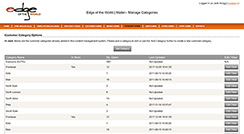 Meantime take email to the Edge of the World